Amazon’s Alexa-powered Echo devices have redefined how we interact with technology within our homes, offering convenience through voice commands and smart home integration. The fourth generation brought a significant design overhaul, shifting from the cylindrical form factor to a more distinctive spherical aesthetic. This evolution aimed to improve both acoustics and visual appeal, making these smart speakers a more seamless part of modern decor. As you may have observed in the accompanying video, a detailed physical comparison between the Amazon Echo 4th Gen and the Echo Dot 4th Gen reveals several key differences crucial for potential buyers.
When considering an upgrade or a first-time purchase, understanding the nuanced distinctions between these two popular models is essential. While both provide access to the vast capabilities of the Alexa voice assistant, they are designed to cater to slightly different user needs and environments. This article will delve deeper into the features, specifications, and practical implications of choosing between the standard Amazon Echo 4th Gen and its more compact counterpart, the Echo Dot 4th Gen, expanding upon the visual comparison presented above.
Amazon Echo 4th Gen vs. Echo Dot 4th Gen: Design and Form Factor
The most immediate and striking difference between these two smart speakers lies in their physical presence and design. The Amazon Echo 4th Gen boasts a more substantial spherical body, designed to make a statement while delivering robust audio performance. Its larger dimensions, approximately 144mm in diameter and 133mm in height, contribute to a more powerful sound profile, making it suitable for larger rooms or as a primary music speaker. Weighing in at 964 grams, it feels solid and premium, suggesting an emphasis on internal components that support its enhanced capabilities.
1. In contrast, the Echo Dot 4th Gen maintains a similar spherical aesthetic but in a much more compact and discreet package. With dimensions around 100mm in diameter and 89mm in height, it is designed for smaller spaces or for placement where a less obtrusive device is desired. At just 334 grams, the Echo Dot is significantly lighter, making it easy to move between rooms or tuck away on a bedside table. This smaller footprint is a primary appeal for users seeking ambient smart home control without a dominant presence.
Key Physical Attributes and Connectivity
Both devices feature the essential physical controls that users expect from an Amazon Echo device. Both the Amazon Echo 4th Gen and the Echo Dot 4th Gen include dedicated buttons for volume up, volume down, microphone on/off, and an action button for various functions. These tactile controls provide convenient access to crucial settings without relying solely on voice commands. Furthermore, each device is equipped with a power port and a 3.5mm audio output jack, allowing for versatile connectivity options.
2. The inclusion of a 3.5mm audio output on both models is a significant feature, providing flexibility for users who wish to connect their smart speaker to external sound systems. This means you can leverage your existing high-fidelity speakers or a soundbar to amplify Alexa’s responses and music playback, effectively turning any traditional audio setup into a smart one. A notable distinction for the larger Echo 4th Gen is the addition of a screw hole for a 1/4″-20 UNC mount. This allows for more secure and creative mounting options, potentially integrating the device into specific stands or professional setups.
Power Consumption and the Unique LED Display
The power requirements of these devices reflect their internal hardware and intended performance capabilities. The standard Amazon Echo 4th Gen comes with a 30.0 Watt power adapter, indicating its need for more energy to drive its more sophisticated audio components and potentially other internal processes. This higher wattage supports the device’s ability to fill a room with rich sound and perform more complex tasks without compromising responsiveness. Energy efficiency, while important, is balanced against performance in the larger Echo unit.
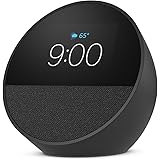
3. The Echo Dot 4th Gen, with its smaller internal speaker and fewer advanced components, operates on a 15.0 Watt power adapter. This lower power draw makes it a more energy-efficient option for those who prioritize minimal electricity consumption or who plan to deploy multiple smart speakers throughout their home. Another distinguishing feature, particularly highlighted in the video, is the optional LED display on certain Echo Dot 4th Gen models. This display is incredibly useful, showing the time, temperature, or a timer countdown at a glance, adding a layer of visual utility that the standard Echo 4th Gen lacks.
Microphone Responsiveness and Light Rings
Both the Amazon Echo 4th Gen and the Echo Dot 4th Gen are designed for quick and accurate voice command recognition. The video demonstrates that both devices respond almost instantaneously when addressed with the wake word “Alexa,” indicating robust microphone arrays and efficient processing. Each device features Amazon’s signature light ring, which illuminates in various colors to indicate its status, such as when it’s listening, processing a request, or if the microphone is muted. An orange LED light indicates the microphone is off, providing a clear visual cue for privacy.
4. When the microphone is reactivated, the light ring typically transitions to a blue or blue-green illumination, confirming that Alexa is ready to receive commands. This consistent visual feedback across both models ensures a uniform and intuitive user experience regardless of the device chosen. The action button can also be used to manually activate Alexa without the wake word, providing another layer of interaction. The swift response times are a testament to Amazon’s ongoing improvements in voice recognition technology.
Audio Performance: Speaker Configuration and Sound Experience
The most significant divergence in user experience between the Amazon Echo 4th Gen and the Echo Dot 4th Gen undoubtedly lies in their audio performance. The standard Echo 4th Gen is engineered to deliver a more immersive and high-quality sound experience, making it suitable for music enthusiasts and those who desire richer audio. It features a sophisticated speaker architecture comprising a 3.0-inch woofer and a pair of 0.8-inch tweeters. This multi-driver setup allows for clear separation of frequencies, providing deep bass, crisp highs, and detailed mid-range sound.
5. The integration of a woofer and tweeters within the Echo 4th Gen enables it to produce room-filling audio, capable of faithfully reproducing a wide range of musical genres and spoken content. This makes it an excellent choice for primary audio playback in living rooms, kitchens, or larger bedrooms. Conversely, the Echo Dot 4th Gen is equipped with a single 1.6-inch speaker. While this smaller driver is perfectly adequate for voice responses, alarms, and casual background music, it cannot match the depth and richness of sound produced by its larger sibling. The Echo Dot prioritizes clarity for voice interaction and compactness over high-fidelity music playback.
Advanced Smart Home Integration and Additional Features
Beyond basic voice commands, the Amazon Echo 4th Gen offers an additional layer of smart home integration thanks to its built-in Zigbee smart home hub. This feature allows the Echo to directly connect and control a wider array of smart devices, such as smart lights, sensors, and locks, without requiring a separate hub. This streamlines your smart home setup and can reduce clutter, making the Echo 4th Gen a central controller for your connected devices. The Echo Dot 4th Gen, while still capable of controlling many smart devices via Wi-Fi and the Alexa app, does not include this integrated Zigbee hub.
6. The standard Echo’s ability to act as a hub provides a more robust and responsive smart home ecosystem for users with multiple compatible devices. This integrated functionality simplifies the setup process and often results in more reliable communication between devices. Both models also offer stereo pairing capabilities, allowing two identical devices to be linked for a more expansive soundstage, and can be grouped with other Alexa devices for multi-room audio. However, the superior internal speakers of the Amazon Echo 4th Gen provide a better foundation for these advanced audio setups.
Choosing Your Ideal Alexa Companion: Amazon Echo 4th Gen vs. Echo Dot 4th Gen
Deciding between the Amazon Echo 4th Gen and the Echo Dot 4th Gen ultimately depends on your specific needs, budget, and how you envision using a smart speaker in your home. If superior audio quality for music listening is a priority, and you desire a more capable smart home hub, the standard Echo 4th Gen is the clear choice. Its larger drivers and integrated Zigbee hub provide a richer experience for both entertainment and home automation. The aesthetic is also more of a focal point, suited for spaces where it can be seen and heard.
7. For those seeking a more discreet smart assistant, primarily for voice commands, controlling basic smart home devices, or placing in smaller rooms like a bedroom or bathroom, the Echo Dot 4th Gen is an excellent and more economical option. The version with the LED display adds practical utility with its clock and timer functions, making it particularly suitable for a bedside table. Both devices offer the core Alexa experience, ensuring that no matter your choice, you’ll gain access to a world of information, entertainment, and smart home control, with the Amazon Echo 4th Gen offering a more premium audio and hub experience compared to the compact Echo Dot 4th Gen.
Whispering Answers to Your Echo ASMR Queries
What are the Amazon Echo 4th Gen and Echo Dot 4th Gen?
They are Amazon’s smart speakers powered by Alexa, allowing you to use voice commands for convenience and smart home integration. Both models feature a new spherical design for improved looks and sound.
What is the main difference in size between the Echo 4th Gen and Echo Dot 4th Gen?
The Amazon Echo 4th Gen is a larger, more substantial spherical speaker, while the Echo Dot 4th Gen is a much smaller and more compact version. The Echo is designed for bigger rooms, and the Echo Dot for smaller spaces.
Which device offers better sound quality for playing music?
The Amazon Echo 4th Gen provides superior audio performance, featuring a larger woofer and tweeters for richer, room-filling sound. The Echo Dot 4th Gen has a smaller speaker that is good for voice responses and background music, but not high-fidelity sound.
Can the Echo Dot 4th Gen show the time or temperature?
Yes, some versions of the Echo Dot 4th Gen come with an optional LED display. This display can show useful information like the current time, temperature, or a timer countdown.