The hilarious video above gives us a glimpse into a world where our smart home devices truly understood every nuance of regional dialect. Imagine the everyday misunderstandings, turned into pure comedic gold! But beyond the laughs, the video highlights a very real challenge many of us face: sometimes, our trusty voice assistants like the Amazon Echo don’t quite get what we’re saying. This can lead to amusing misinterpretations, whether you’re trying to play some country music or just add biscuits to your grocery list.
It’s a common issue for anyone with a distinct accent or a love for regional phrasing. Our voice-activated companions, while incredibly sophisticated, still have a learning curve when it comes to the rich tapestry of human speech. Let’s dive deeper into why these digital misunderstandings happen and how we can make the most of our smart home technology, even when our Southern charm (or any regional accent) might throw it a curveball.
Understanding Your Digital Dialect: Why Accents Matter to Voice Assistants
In the video, the initial request for “something slow on the Country Music station” somehow translates to a discussion about “extreme constipation.” It’s a stark reminder that what sounds perfectly clear to us can be a linguistic puzzle for a voice assistant. These devices, including the popular Amazon Echo, rely on complex algorithms for speech recognition. They convert your spoken words into text, then try to understand the intent behind that text.
Accents, intonation, and regional slang introduce variability into this process. A standard algorithm might be trained on a broad range of speech patterns, but specific regional pronunciations can deviate from these learned norms. Imagine if you consistently say “pin” instead of “pen,” or “coke” when you mean any carbonated beverage; a voice assistant might struggle with context. It’s not that the AI is being stubborn, it’s just trying to match your unique sound patterns to its massive database of words and commands.
For those of us with a Southern accent, this can be particularly true. The melodic flow, the subtle vowel shifts, and the occasional dropped ‘g’s can all contribute to a voice assistant’s confusion. To improve communication, try speaking a little slower and enunciating more clearly when giving commands. Sometimes, rephrasing your request slightly can also help the **Amazon Echo** grasp your meaning.
Beyond Biscuits: Cultural Nuances in Smart Home Commands
The “canned biscuits” conundrum in the video perfectly illustrates how cultural context plays a huge role in everyday requests. For many in the South, “biscuits” often implies a homemade, from-scratch culinary endeavor involving flour, baking powder, and sugar. So, when Talia Lin asks for “biscuits,” the Southern Alexa understandably starts listing ingredients for a traditional recipe. The idea of “canned biscuits” is almost an affront to a certain culinary tradition!
This humorous exchange highlights a real challenge for voice assistants like your **Amazon Echo**. They are programmed with general knowledge, but they rarely understand the deep cultural significance or regional preferences that color our daily lives. Imagine if you asked your **smart home technology** to add “grits” to your grocery list. A standard assistant might just add “grits.” But a truly culturally aware assistant might ask, “Stone-ground or instant, hon?”
These cultural nuances extend far beyond food. They touch on everything from regional expressions like “y’all” or “fixin’ to” to how we describe items or activities. As AI evolves, the hope is for more personalized **voice assistants** that can learn and adapt to these subtle but significant cultural differences, making our interactions feel more natural and intuitive.
Politeness Pays: Teaching Manners to Your Voice Assistant
“That’s not how you ask a question.” This gem from the Southern Alexa perfectly captures the importance of manners, even when speaking to a machine. While a standard **Amazon Echo** doesn’t truly understand or appreciate politeness, using “please” and “thank you” has a few hidden benefits. Firstly, it encourages good habits in ourselves and, as seen in the video, in the children interacting with the device. It teaches respectful communication, a valuable lesson in any context.
Secondly, sometimes adding a polite word can subtly change the phrasing of a command, making it clearer for the **voice assistant** to process. “Alexa, please tell me which one is faster?” is a more structured command than simply blurting out the question. This clarity can sometimes lead to better results. In the video, the Southern Alexa eventually provides the correct answer: “A cheetah can run up to 80 miles per hour, nearly twice as fast as a tiger.” This not only satisfies the children’s curiosity but also rewards the polite inquiry.
So, while your **smart home technology** won’t feel hurt if you’re impolite, practicing good manners certainly doesn’t hurt your interactions and can reinforce positive communication habits for everyone in the household.
From Knees to Know-How: The Art of Southern Weather Forecasting (and AI’s Take)
“Well, my left knee is acting up something awful, so we’re probably due for a gully washer.” This classic Southern weather prediction, based on personal aches and folk wisdom, provides another hilarious contrast with modern **smart home technology**. While your **Amazon Echo** typically pulls its weather updates from sophisticated meteorological services, the charm of traditional forecasting remains strong in many communities.
For centuries, people have relied on observations of nature, animal behavior, and even their own bodies to predict the weather. Aches in old joints, the way clouds gather, or the scent of the air could signal an impending storm. While endearing, this contrasts sharply with the precise, data-driven forecasts delivered by your **voice assistant**. Your **Amazon Echo** uses satellite imagery, radar data, atmospheric pressure readings, and complex computer models to provide highly accurate, hour-by-hour weather predictions.
But imagine if your **Southern Alexa** could combine the best of both worlds! A voice assistant that offers a precise percentage chance of rain, then adds, “And I reckon you best bring in them clothes from the line, just in case, darlin’.” It’s the blend of cutting-edge information with comforting, familiar wisdom that makes the idea of a truly culturally attuned **smart home technology** so appealing.
More Than Just Talk: The Everyday Power of Your Smart Home Assistant
Beyond the humorous misunderstandings, the video reminds us of the incredible utility of devices like the **Amazon Echo**. They are powerful pieces of **smart home technology** designed to simplify our daily lives. From ordering your favorite pizza to streaming music, managing your grocery list, or settling a debate about animal speeds, these **voice assistants** are invaluable tools.
Think about how much easier life becomes when you can just use your voice. Need a timer while your hands are covered in flour? “Alexa, set a timer for 10 minutes.” Want to know the latest news while you’re getting ready? “Alexa, what’s the news briefing?” Controlling smart lights, making hands-free calls, playing podcasts, or even setting morning alarms – the capabilities are vast. These devices integrate seamlessly into your routine, turning simple voice commands into powerful actions that enhance productivity and entertainment.
The true magic of a **voice assistant** lies in its ability to respond to natural language and perform tasks that once required manual input. This convenience is universal, whether you’re speaking with a pristine accent or a distinctive regional dialect. The goal is always to make technology more accessible and helpful for everyone.
The Future of Voice AI: Embracing Regionality and Personalization
The vision of a “Southern Alexa,” available in burlap and reclaimed barn wood, with monogramming sold separately, is a wonderfully charming concept. It highlights a future where **smart home technology** isn’t just functional but also deeply personal and culturally resonant. While we might not get a literal Southern Alexa (or a Midwestern, or a Northeastern one), the underlying desire for AI that truly understands us is profound.
The field of artificial intelligence is constantly advancing. Speech recognition systems are becoming more sophisticated, capable of handling a wider array of accents, speech patterns, and even languages. Future **voice assistants** will likely be even better at contextual understanding, learning your personal preferences, and adapting to your unique way of speaking. Imagine your **Amazon Echo** learning your family’s specific slang or understanding when you ask for “pop” instead of “soda.”
This evolution means that the delightful misunderstandings portrayed in the video might become less common, as **smart home technology** becomes more attuned to human diversity. The humor will always remain in our rich linguistic tapestry, but our digital companions are getting smarter, helping us bridge the gap between human language and artificial intelligence, making our homes more connected and our lives a little easier, no matter how we talk.
Y’all Got Questions? Southern Alexa’s Answers
What is a voice assistant?
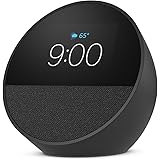
A voice assistant, like Amazon Echo, is a smart home device that responds to your spoken commands. It uses special technology to understand your words and help you with tasks.
Why might my voice assistant sometimes misunderstand me?
Voice assistants can sometimes struggle with different accents, speech patterns, or regional slang. This is because these variations can make it harder for the device to correctly interpret your words.
How can I help my voice assistant understand me better?
You can try speaking a little slower and more clearly when giving commands. Sometimes, rephrasing your request in a different way can also help the device understand what you mean.
What are some common things a voice assistant can do?
Voice assistants can perform many tasks, such as setting timers, playing music, providing news updates, managing grocery lists, and controlling smart devices in your home.